
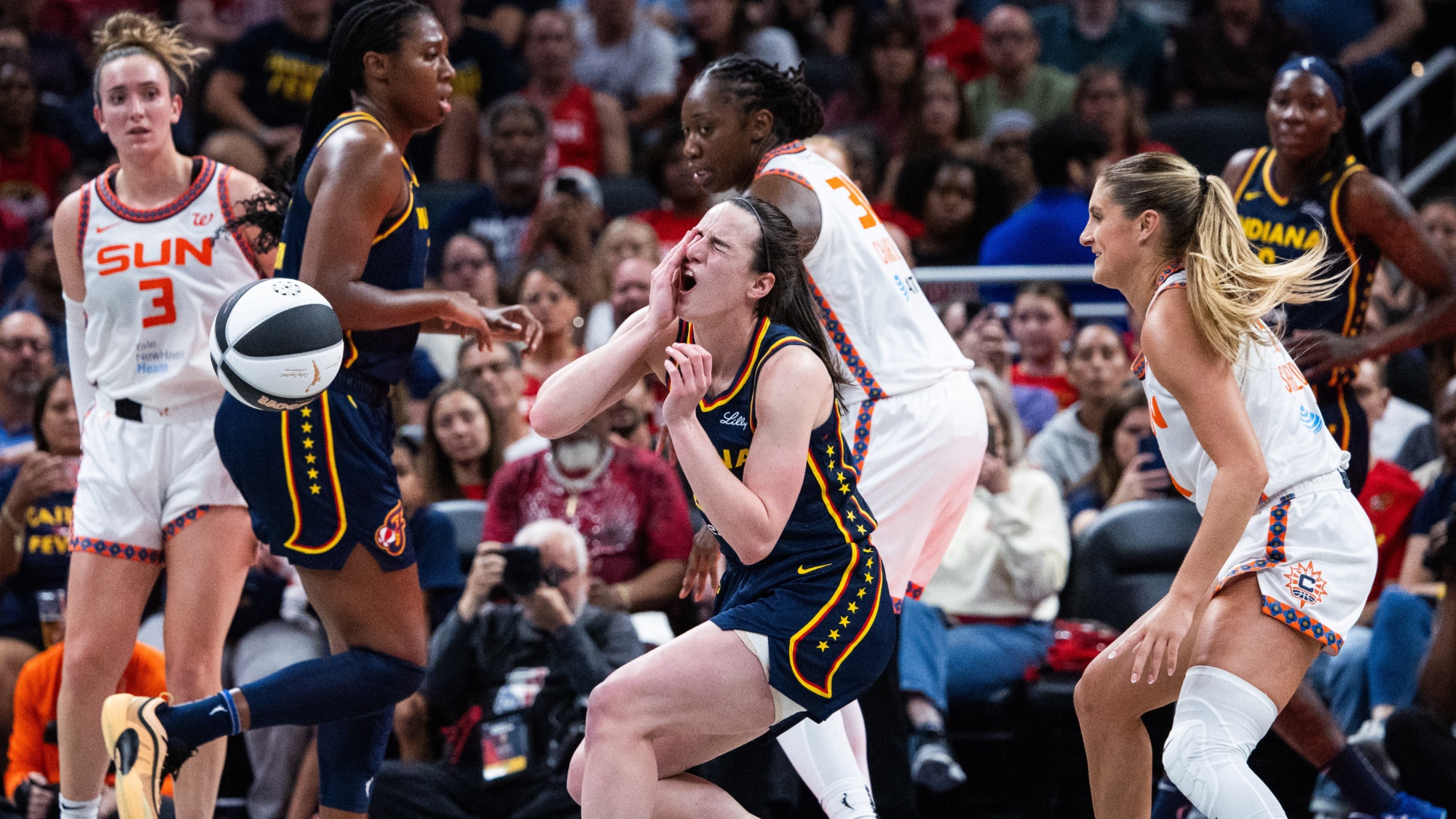

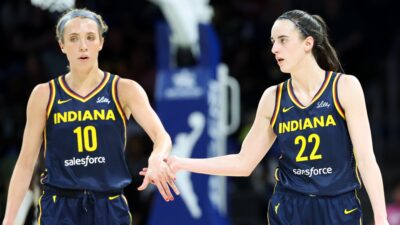
WNBA analyst Rebecca Lobo recently went viral after she openly criticized how referees are officiating Indiana Fever star Caitlin Clark. Lobo suggested that referees are allowing opposing teams to play too physically or too roughly with Clark.
During one possession in the Fever’s highly anticipated matchup against the Dallas Wings on Sunday, a defender repeatedly grabbed and hit Clark without drawing any fouls. While covering the game for ESPN, Lobo responded by criticizing the referees.
How Do Personal Fouls Work In WNBA?
In the WNBA, a player commits a personal foul in much the same way as in other basketball leagues. Either a defensive player or an offensive player (in which case it’s called an offensive foul) commits a personal foul. All players have “equal rights to any position they have legally obtained,” according to the league’s rulebook. It added: “A player shall not hold, push, charge into, impede the progress of an opponent by extending an arm, leg, or knee, or by bending the body into a position that is not normal.” It is pretty common to see a player, especially if she is on the defensive side, committing a personal foul.
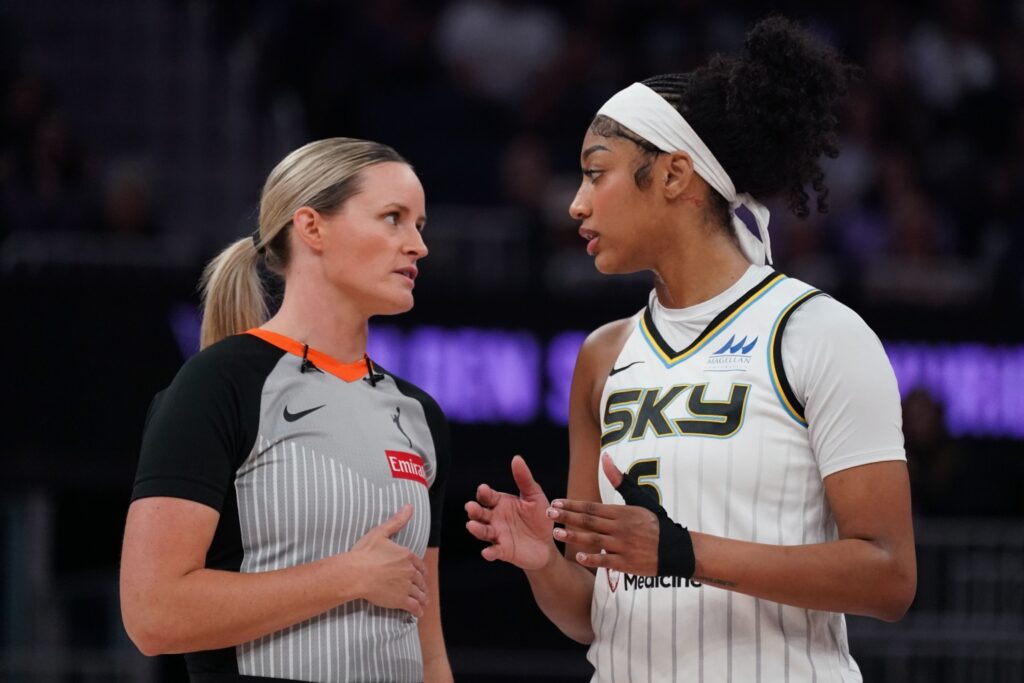
“Any player whose actions against an opponent cause illegal contact with yet another opponent has committed the personal foul,” read Section I of Rule No. 12: Fouls and Penalties. “The offender is charged with a personal foul. The offended team is charged with a team foul if the illegal contact was caused by the defender. There is no team foul if the personal foul is on an offensive player.”
An offensive player earns free throws if a defender commits a personal foul while she was in the act of shooting. The same applies if the opposing team is already in the penalty. Each player may commit up to five personal fouls. Officials automatically disqualify a player from the game after the sixth one.
How Do Flagrant Fouls Work In the WNBA?
Unlike personal fouls, which players commit regularly throughout the game, a flagrant foul in the WNBA occurs less often. However, it is also very similar to other basketball leagues. Many refer to a flagrant foul as a “non-basketball play.” A recent example was when Fever guard Sophie Cunningham delivered a hard foul on Connecticut Sun guard Jacy Sheldon.
Scroll to continue reading
Trending WNBA News

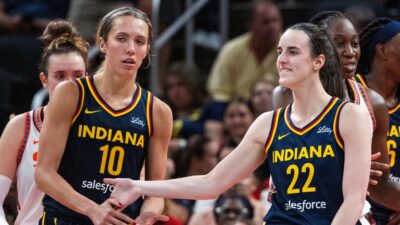


There are two types: Flagrant foul penalty 1 and Flagrant foul penalty 2. According to Section IV of Rule No. 12: Fouls and Penalties, a flagrant foul penalty 1 is whistled when “contact committed against a player, with or without the ball, is interpreted to be unnecessary.” A flagrant foul penalty is called when the said contact is deemed both “unnecessary” and “excessive.”
A flagrant foul penalty 1 automatically results in two free throws for the offended player and her team retains possession of the ball. A player will be disqualified from the game after two flagrant fouls. A flagrant foul penalty 2, meanwhile, merits automatic ejection. It could also lead to a suspension.
Physicality In The WNBA
Fans agreed with Lobo after her remarks on officiating spread on social media. After all, she speaks from experience as a legend in women’s basketball and one of the WNBA’s pioneers. Many fans echoed her view, saying referees are applying a double standard when officiating Clark compared to other players.
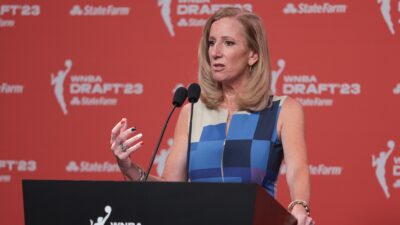
While that will likely remain a topic of debate, WNBA commissioner Cathy Engelbert has already refuted claims that referees are “targeting” specific players. She also stated that reviewing a large sample of games would clearly show that the WNBA is “a physical game“ and emphasized that the league sees no major issues with the officiating.
Also Read: Angel Reese Criticizes WNBA Referee For Few Free Throws In Chicago Sky’s Loss to Minnesota Lynx