

In basketball, few elements have reshaped the game as profoundly as the three-point line. It stretches the defense, rewards range, and creates space for both dynamic slashers and floor-spreading bigs. For the WNBA, the arc has been just as impactful, playing a major role in how the league evolved stylistically over the decades. But when exactly did the three-point line become part of the WNBA, and how has its use changed since then?
This article will take you through the full history of the WNBA’s three-point line—when it was introduced, how it differed from other leagues, what changes were made over time, and how it has shaped player development and strategy. Whether you’re a longtime fan or new to the league, here’s everything you need to know about the WNBA’s three-point journey.
When Was the Three-Point Line First Introduced in the WNBA?
The WNBA adopted the three-point line from its very first season in 1997, the same year the league was founded. That early inclusion set the stage for an exciting brand of play, even though the three-pointer wasn’t initially a major part of team strategy like it is today.
SABRINA SETS ALL-TIME WNBA & NBA RECORD WITH 37 PTS IN FINAL ROUND OF 3PT CONTEST
— Bleacher Report (@BleacherReport) July 14, 2023
HISTORY 🏆
(via @WNBA) pic.twitter.com/MeODal62oz
At the time of its debut, the WNBA’s three-point line was set at 19 feet, 9 inches—the same distance used by the NBA until 1994 and the same arc then used in NCAA women’s basketball.
How Has the WNBA’s Three-Point Line Changed Over Time?
The three-point line in the WNBA hasn’t always been the same. It saw multiple ups and downs and a couple of adjustments.
Here’s a breakdown of key changes:
Scroll to continue reading
Trending WNBA News







1997 to 2002: During the initial few years, the line measured 19 feet, 9 inches, matching the NCAA standard.
2003: The arc changed to 20 feet, 6.25 inches, the international FIBA standard at the time.
2013: The WNBA extended the arc once again, this time to 22 feet, 1.75 inches at the top of the key and 21 feet, 8 inches in the corners, aligning it with FIBA’s updated three-point line.
Present Day: As of the 2025 season, the WNBA continues to use the FIBA standard—which remains a bit shorter than the NBA’s arc, but significantly longer than the league’s original line in the late ’90s.
Which Players and Teams Have Best Mastered the Three-Point Game?
A few players and teams stand out when it comes to shaping the league’s three-point identity. Diana Taurasi is the undisputed queen of the arc. She’s hit over 1,300 three-pointers in her career and continues to be a threat from deep well into her 40s. Her quick release, deep range, and confidence have set the standard for future generations.
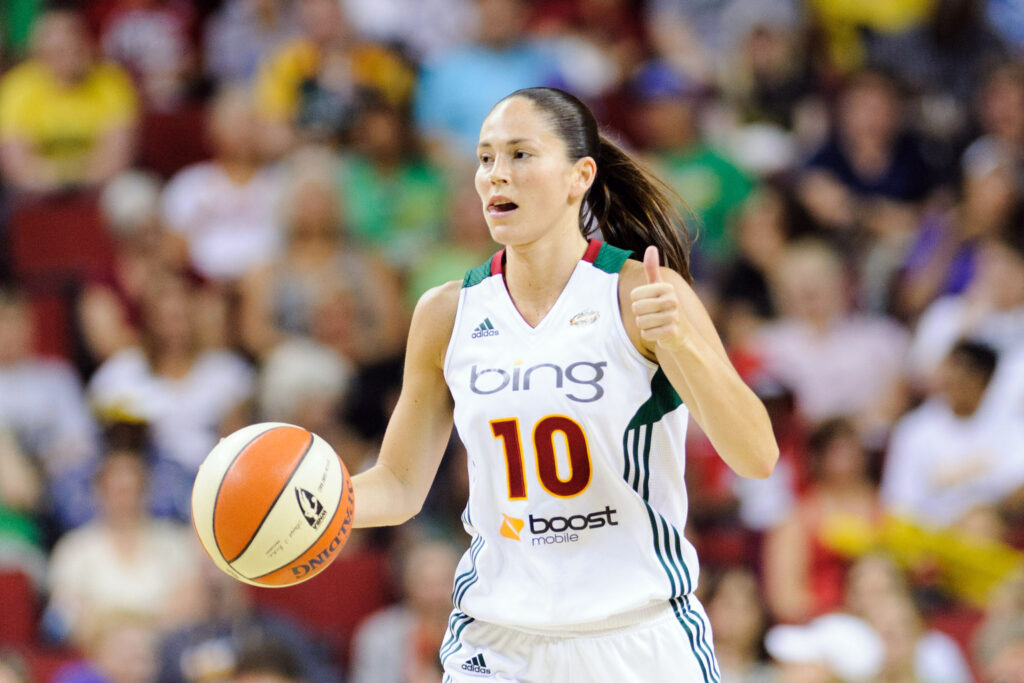
Other iconic shooters include:
Sue Bird: Known for her steady hand and timely three-point shooting, especially in playoff moments. She has also been known for her legendary run at the Seattle Storm
Kristi Toliver: A pure shooter who helped the Washington Mystics claim the 2019 title with her perimeter prowess.
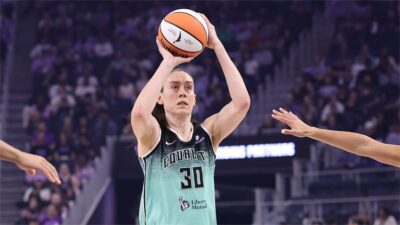
Sabrina Ionescu: One of the league’s brightest stars today. She tied the WNBA record for most threes in a single game with eight three-pointers. Additionally, she won the 2023 three-point contest with a record-breaking performance.
On the team level, franchises like the Seattle Storm, Phoenix Mercury, and Las Vegas Aces have built high-powered offenses centered around three-point shooting.
Also Read: NBC Sports Taps Maria Taylor As Lead Host For NBA And WNBA Shows